Heen Bovitiya Side Effects: Is It Safe? 6 Things to Know
Every herbal tea earns its reputation two ways: what it does, and what it might do to the wrong person at the wrong dose. Heen Bovitiya has built a strong case for the first part. Hospital trials in Sri Lanka have tested it on real patients with fatty liver disease and diabetes. The results have been promising enough to draw attention well beyond Sri Lanka.
Heen bovitiya side effects get far less attention than its benefits do, and that gap is worth closing. A tea that helps thousands of people can still carry a real risk for a smaller group. Someone on blood-thinning medication. Someone who is pregnant. Someone managing a bleeding disorder. Knowing where those lines sit matters just as much as knowing what the tea can do.
This guide brings together what the clinical research actually shows about safety. Three separate human trials tested doses from a twice-daily powder to a daily capsule, and none found a serious adverse effect. At the same time, some of the same properties that make this tea useful create its real risks for certain people. Its effect on blood sugar cuts both ways. So does its effect on blood clotting.
The sections ahead separate what actually happened in human trials from what only comes from animal or lab studies, since that distinction changes how much weight a finding should carry. You will learn which drug classes carry a genuine interaction risk, and which groups should avoid this tea altogether. You will see what the evidence says about allergic reactions, and how much is too much, including a caution about one traditional preparation that is easy to overdo.
None of this is meant to scare anyone away from a tea with a long, well-documented safety record. It is meant to help you drink it the right way, or know when not to drink it at all.
Is Heen Bovitiya Generally Safe? What Human Trials Show
Standard toxicity testing on Heen Bovitiya already shows a wide margin of safety. Animal studies found no harmful effects, even at doses far beyond anything a tea drinker would consume. The plant also does not appear to interfere with the liver’s main drug-processing system. That groundwork is well established elsewhere.
What matters more, for someone deciding whether to drink this tea daily, is what happened in the actual human trials. Animal and lab findings do not always translate directly to people. Three separate human trials give a clear, if slightly more nuanced than expected, picture.
A 122-Patient Trial, 16 Weeks
At Colombo North Teaching Hospital, 62 patients with fatty liver disease drank 6 grams of Heen Bovitiya powder every other day. They took it alongside standard medical care, for 16 weeks. No acute side effects showed up. Researchers recorded no gastrointestinal distress and no signs of liver damage.
The trial also tracked several secondary health markers, and the results there deserve a closer look. Fasting blood sugar and a related marker called HbA1c both rose slightly, though not by a statistically meaningful amount. Total cholesterol and LDL, the kind often called “bad” cholesterol, rose by a statistically significant amount. That sounds concerning on its own. But the same rise showed up in the group that did not drink the tea.
When a change shows up equally in both groups, researchers read that as a sign the change came from something both groups shared. The most likely explanation is the standard medical care or lifestyle guidance everyone received, not the tea itself.
Triglycerides, a type of fat measured in the blood, dropped by about 6 percent. HDL, the “good” cholesterol, rose slightly. Neither change reached statistical significance. A marker of inflammation called hs-CRP dropped in the tea-drinking group, but it dropped even more among patients who received standard care alone.
None of this points to a safety concern. It does mean that some of the encouraging cholesterol and inflammation numbers from this trial likely say more about the standard care both groups received than about the tea working on its own.
A quick note on what “not significant” actually means: some findings in this guide are described as statistically significant, and others are not. A statistically significant result is one unlikely to have happened by chance alone. A non-significant result is not automatically false. It simply means the study cannot rule out chance as the explanation. That is why the triglyceride and HDL changes above are reported as real numbers that did not reach significance, rather than as proven effects. It is also why comparing the tea group to a control group matters so much. A change that shows up only in the treatment group is a far stronger signal than one that shows up in both.
A 30-Patient Capsule Trial, 2 Months
A second trial tested Liv-Pro, a capsule combining Heen Bovitiya with aloe vera, in 30 patients with fatty liver disease. It ran for two months. This trial used a double-blind, placebo-controlled design. Neither the patients nor the researchers knew who received the real capsule, and who received an inactive one, until the study ended.
That design matters. People often feel better simply from the act of trying something new, whether or not it actually works. A design like this filters that effect out. Zero side effects were reported, and patient tolerability was rated high throughout.
Unlike the tea-only trial above, this capsule trial showed clear improvement across the board, not just in secondary markers. Two liver enzymes, ALT and AST, are used to check for liver cell damage, since they leak into the bloodstream when liver cells are under stress. Both dropped significantly at the one-month and two-month mark. Cholesterol, LDL, and triglycerides all dropped significantly as well. Kidney function, measured through a marker called creatinine, stayed completely normal the entire time.
A 30-Patient Diabetes Trial, 1 Month
A third trial gave 30 diabetic outpatients two spoonfuls of Heen Bovitiya leaf powder, steeped in warm water, twice a day for one month. Checking liver function in a diabetes trial might seem like an odd choice. But it reflects sound research practice. Even when a treatment’s main goal is blood sugar control, researchers still check for unintended effects on other organs before calling it safe.
Researchers checked four separate liver function markers: total bilirubin, alkaline phosphatase, SGOT, and SGPT. All four stayed within the normal range before and after treatment. No gastrointestinal irritation and no episodes of dangerously low blood sugar were reported, even with twice-daily dosing over a full month. Fasting blood sugar dropped by a statistically meaningful amount.
What This Means Together
Across all three trials, covering three different doses and preparations, nobody experienced a serious adverse event, liver damage, or kidney damage. The one place the data gets genuinely nuanced is the 122-patient trial’s cholesterol numbers. Even there, the honest reading is that both groups moved in the same direction. That is different from saying the tea caused a problem. It is the difference between “this tea raises your cholesterol” and “cholesterol moved for a reason unrelated to this tea.” The evidence points to the second explanation.
None of these three trials tested Heen Bovitiya alongside a specific prescription medication on purpose. That question, what happens when this tea meets another active ingredient already in someone’s system, is exactly where the research turns next.
Drug Interactions: What to Know Before Combining It With Medication
Heen Bovitiya’s own research literature says its main compounds do not interfere with the liver’s primary drug-processing enzymes. That is reassuring as far as it goes. But it does not rule out every kind of interaction. Two specific drug classes carry a documented risk when combined with this tea. One drug class shows the opposite: a protective effect. A few others simply have not been studied yet.
“Natural” does not mean inactive. A plant compound that lowers blood sugar or thins the blood is doing exactly that, whether it comes from a pharmacy shelf or a garden. That is precisely why the interactions below deserve the same seriousness as any other active ingredient.
Blood Thinners and Anti-Platelet Medication
This is the interaction worth taking most seriously. Heen Bovitiya’s own phytochemical profile is classified as an anti-aggregant. That means it has a natural ability to reduce how easily blood platelets, the small blood cells responsible for clotting, clump together in the first place. That effect can support healthy circulation on its own. But it becomes a real concern for anyone taking a blood thinner or anti-platelet drug, including warfarin, heparin, aspirin, or clopidogrel.
Two things that both reduce clotting do not simply add up evenly when combined. The combined effect can be stronger than either alone. That raises a genuine risk of excess bleeding, or unusually slow clotting after a cut or injury.
This risk is made worse by a separate, practical problem. Heen Bovitiya is sometimes substituted in the raw herbal market with a related plant, Melastoma malabathricum. That related plant has its own documented blood-thinning effect in laboratory testing. Because it is a different plant, its research should not be read as proof of what Heen Bovitiya itself does. But adulteration is a real, known issue in the herbal trade. Buying from a source that verifies the actual plant inside the package matters even more for anyone on blood-thinning medication. Anyone in this position should talk to a doctor or pharmacist before adding Heen Bovitiya to their routine.
Diabetes Medication
Heen Bovitiya has a genuine, well-documented blood-sugar-lowering effect. Animal studies show its peak effect on blood sugar arrives about three hours after ingestion. The size of that effect has been compared to a standard diabetes drug called tolbutamide. Human trials confirm a real drop in fasting blood sugar as well.
That is encouraging for someone managing blood sugar through diet and lifestyle. Combined with insulin, metformin, or a sulfonylurea medication, though, that same effect turns into a real risk. Combining a genuinely effective blood-sugar-lowering tea with a blood-sugar-lowering drug can push blood sugar down further than intended. That raises the risk of hypoglycemia, the medical term for blood sugar dropping too low. This is its own medical concern, separate from the high blood sugar diabetes medication is meant to treat. Anyone on diabetes medication should treat Heen Bovitiya as an active ingredient worth mentioning to their doctor, not a neutral beverage.
Paracetamol and Other Liver-Damaging Drugs
Not every interaction on this list is a risk. Animal studies show Heen Bovitiya extract actively protects the liver against paracetamol overdose damage. It preserves the liver’s natural detox molecule, called glutathione, and keeps liver enzymes closer to normal. Notably, this protection still worked even when the extract was given about twenty minutes after the toxic exposure had already happened. That timing suggests the extract actively helps the liver recover, rather than simply blocking damage before it starts. Similar protective effects show up against other laboratory liver toxins.
This is worth including specifically because it shows the tea does not universally raise medication risk. In this particular case, the evidence points the other way, toward the tea actively helping.
Sedatives and Blood Pressure Medication
For sedatives and central nervous system medications like benzodiazepines, the research on Heen Bovitiya itself is simply silent. No study has tested this combination directly, in either direction. The related adulterant plant does have a traditional use as a sedative. That is one more reason authentic sourcing matters, but it is not a finding about Heen Bovitiya itself, and it should not be treated as one.
The same absence of data applies to blood pressure medication, beta-blockers, and calcium channel blockers. No published research has tested these combinations either way. An absence of data is not the same as a guarantee of safety. A reasonable degree of caution, and a conversation with a doctor, makes sense even without a specific finding to point to.
Who Should Avoid Heen Bovitiya Tea
Most of the safety data on Heen Bovitiya comes from generally healthy adults. A few specific groups have real, documented reasons to avoid it entirely, or to check with a doctor first.
Pregnant and breastfeeding women. Commercial product labels for Heen Bovitiya explicitly advise against use during pregnancy and breastfeeding. This caution comes from product safety labeling rather than a clinical trial, and the reasoning behind it is worth understanding rather than just following blindly. The leaves contain a high concentration of astringent compounds called tannins and saponins. Traditional herbal medicine generally advises against strong astringent herbs during pregnancy, due to a risk of stimulating uterine contractions. A related plant in the same family is traditionally used to tone the uterus after childbirth, which adds further weight to the concern. Taken together, this is a clear case where caution outweighs any potential benefit.
Children under 12. Product labels also advise against giving Heen Bovitiya to children under 12. The reasoning here is straightforward. The tea has real effects on blood sugar and blood clotting, and safe dosing has never been formally studied in children. A dose that is well tolerated in an adult body is not automatically safe in a much smaller, still-developing one. Until dedicated research exists, the safer choice is to avoid it in this age group entirely.
Elderly, malnourished, or underweight individuals. This caution is less obvious than the others, but it is well documented. Part of how Heen Bovitiya supports liver health is by helping the body break down and clear stored fat. That is genuinely useful for someone with excess liver fat. That same mechanism raises a real concern, though, for someone who is already malnourished, underweight, or has a condition that affects how the body absorbs fat. In these situations, regularly clearing more fat from the body could worsen an existing deficit. It could also make it harder to absorb fat-soluble vitamins, specifically vitamins A, D, E, and K, which the body can only take in alongside dietary fat.
People with bleeding disorders. Anyone with hemophilia, von Willebrand disease, or another condition that already affects blood clotting should avoid Heen Bovitiya. This follows directly from its natural anti-aggregant effect described above. Someone whose blood already clots more slowly than normal has even less room for an additional clotting-related effect. The risk is compounded further by the same adulteration concern covered throughout this guide.
People with iron-deficiency anemia. Heen Bovitiya’s tannins bind to dietary iron and zinc in the gut, reducing how much the body actually absorbs. This is not a reason for most people to avoid the tea. But anyone managing iron-deficiency anemia should take one simple precaution. Either avoid high-dose extracts, or drink the tea at a different time than iron supplements and iron-rich meals. That gap keeps the tannins from blunting how well the iron is absorbed.
None of these cautions apply to the general population these trials were drawn from. But if you fall into one of these groups, the safest approach is to avoid the tea, or bring it up with a doctor first.
Allergic Reactions and Skin Sensitivity
No case of a true allergic reaction to Heen Bovitiya itself appears anywhere in the clinical literature. That is a genuinely reassuring finding. It comes with one honest caveat, though: clinical trials routinely exclude people with known sensitivities to herbal products before the trial even begins. This is a standard safety precaution, designed to protect participants, not to hide a real risk. It does mean, however, that these trials were never really testing whether an allergy-prone person could react safely, since those participants were never enrolled in the first place. The absence of reported allergic reactions is real, but it is not quite the same as proof that no one, anywhere, could ever react to it.
Two more specific risks are worth knowing, even though neither applies to typical tea drinking.
The first involves pollen, not tea. Heen Bovitiya belongs to a plant family, Melastomataceae, whose pollen has been documented as a trigger for allergic rhinitis, commonly known as hay fever. It can also worsen asthma in people who already have it. This mainly matters for people who grow, harvest, or process the flowering plant directly, since tea is made from the leaves, not the flowers. A typical tea drinker has essentially no exposure to the plant’s pollen.
The second involves direct skin contact with raw plant material. Heen Bovitiya is traditionally made into a paste for topical use on joint pain. Formal safety testing on this exact use is limited. But research on a closely related plant, along with anecdotal reports, both point to a real possibility of skin rashes or contact dermatitis from handling raw, crushed leaves. This is worth knowing for anyone preparing the plant fresh at home, though it does not apply to drinking a prepared cup of tea.
As with any new herbal tea, a sensible first step is to start small. Try a partial cup, then watch for any unusual reaction over the following day, rather than beginning with a full daily dose.
Real-World Dosage: What the Doses Actually Tested Show
Every dose discussed elsewhere in this guide comes from an actual study, not a guess. Looking at them side by side helps answer a simple, practical question: how much is too much?
900 milligrams a day, as a capsule, for two months. This is the Liv-Pro capsule dose covered earlier. It came back well tolerated, with no adverse effects.
6 grams every other day, as loose powder, for 16 weeks. This is the largest human trial covered in this guide. It also came back free of acute side effects, with the cholesterol nuance already explained above.
About 10 grams a day, split into two doses, for one month. This is the diabetes trial dose, and the highest daily amount tested in humans so far. Even at this level, taken twice daily for a full month, liver function stayed normal. No gastrointestinal or blood sugar emergencies were reported.
These three doses are not directly comparable on a gram-for-gram basis. A capsule extract is more concentrated than raw leaf powder. Raw powder steeped as tea concentrates differently again, depending on how it is prepared. What matters most is that each specific preparation, at the specific amount actually tested, came back safe in its own right. The numbers do not need to scale neatly from one form to another for that to be true.
Animal studies have separately tested much higher amounts. Lab-dish studies have tested concentrated extracts that a person would never actually drink. Those numbers matter for researchers trying to understand exactly how the plant works. But they do not translate directly into a “safe human dose.” A concentrated extract applied directly to cells in a dish behaves very differently from a cup of brewed tea passing through digestion. The doses worth paying attention to, as a tea drinker, are the three human ones above, not the laboratory figures behind them.
Across all three human doses, the pattern is consistent. Real amounts, tested in real people for weeks at a time, have not produced organ damage or serious side effects. That gives a reasonable, evidence-backed range to work within, roughly one to two servings a day, rather than a reason to worry about a typical daily cup.
One Traditional Preparation Worth a Specific Caution
Not every traditional use of this plant carries the same low-risk profile as tea. Heen Bovitiya is also used to make a traditional herbal porridge called Kola Kenda. It combines fresh leaf juice with coconut milk and red rice, often eaten first thing in the morning on an empty stomach. Nutritional research specifically warns that eating this porridge frequently, and in excess, can strip the body of essential fatty acids over time.
This is not a reason to avoid the porridge on occasion. It also says nothing bad about the tea itself, which does not carry the same concentrated dose of fresh leaf juice. It is simply a reminder that even a genuinely traditional, food-based preparation benefits from moderation, the same way any concentrated dose of a bioactive plant would.
Getting an Authentic, Safe Product
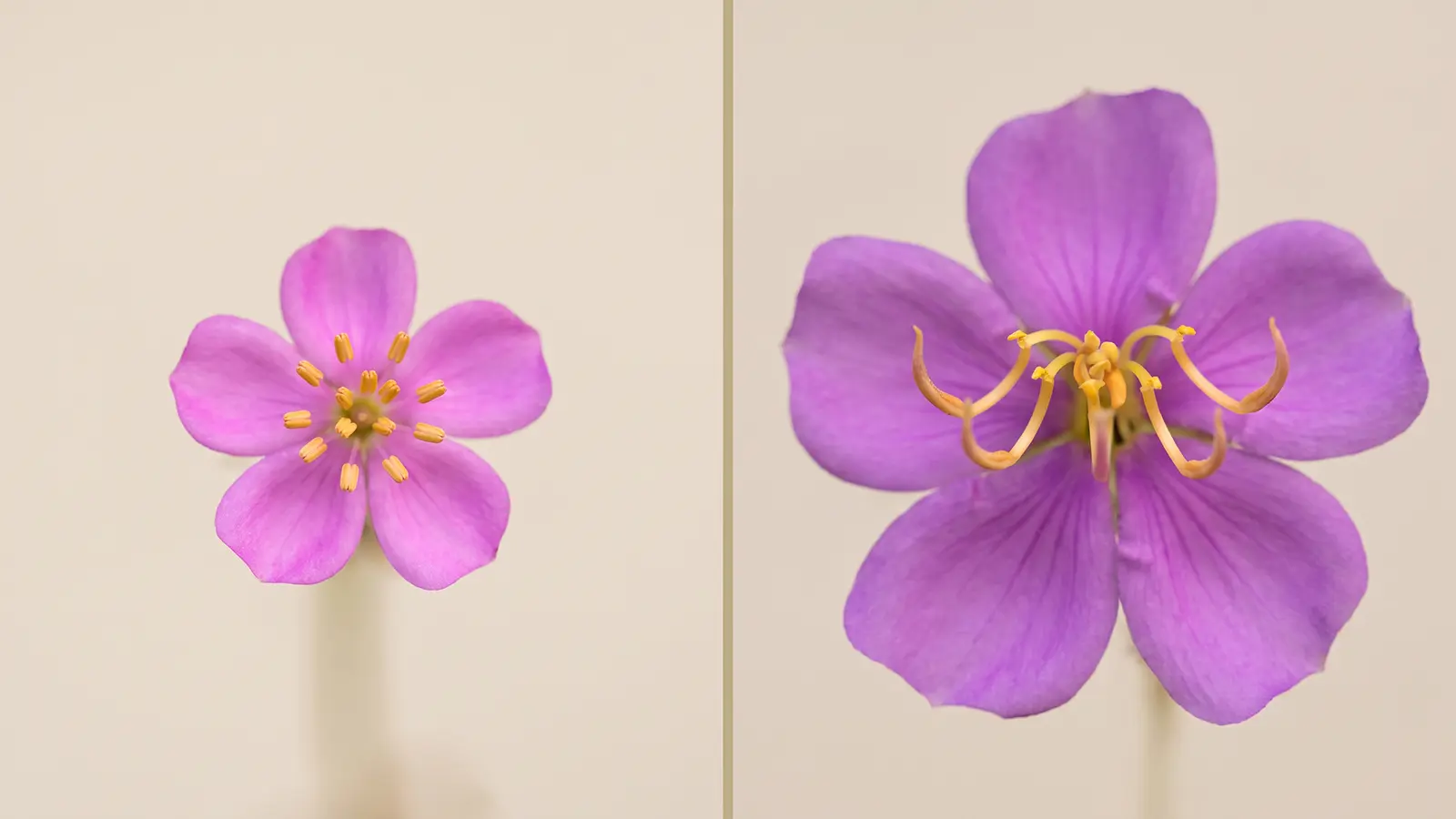
Everything covered so far assumes the tea in your cup is genuine Heen Bovitiya. That assumption does not always hold. Several of the cautions in this guide, especially the bleeding-risk interaction with blood thinners, become more serious when the product in question is not actually pure Heen Bovitiya. In the raw herbal market, this plant is sometimes confused with two look-alike species, Osbeckia aspera and Melastoma malabathricum. Neither carries the same documented safety and benefit profile. As covered earlier, the second one specifically has its own blood-thinning effect that has nothing to do with genuine Heen Bovitiya.
This kind of substitution is a known, documented issue in the herbal trade, not a rare or theoretical concern. For most general wellness uses, an unverified product mainly risks disappointment: a tea that simply does not deliver the benefits Heen Bovitiya is known for. For someone on blood-thinning medication specifically, it can be a genuine safety issue, since they would be exposed to a different plant’s interaction risk without knowing it.
The practical takeaway is straightforward. Buy from a source that tests and verifies the actual plant inside the package, rather than relying on foraged or unverified material. This matters most if any of the caution categories in this guide apply to you. A pre-tested, pre-portioned product also removes the guesswork around dosing that comes with loose, unlabeled leaves. That matters, given how much of this guide’s advice depends on staying within the doses that have actually been studied.
Conclusion
Heen Bovitiya has a genuinely strong safety record. Three separate human trials, testing three different doses and preparations, found no serious adverse events, no liver damage, and no kidney damage. For most healthy adults, that is a reassuring, evidence-backed picture, not a marketing claim.
The real nuance in heen bovitiya side effects sits in the details, rather than in any single alarming finding. The tea’s genuine effects on blood clotting and blood sugar, the same properties behind some of its benefits, create real interaction risks for anyone taking blood thinners or diabetes medication. Pregnant women, breastfeeding women, and children under 12 should avoid it entirely, based on documented product safety labeling. People with bleeding disorders, iron-deficiency anemia, or a condition affecting fat absorption each have their own specific reason for caution, grounded in how the plant actually works.
Sourcing matters too. A product that has actually been tested for authenticity closes the gap between Heen Bovitiya’s real safety profile and a look-alike species that does not share it, including the blood-thinning risk from Melastoma malabathricum covered earlier.
None of this makes Heen Bovitiya unusually risky compared to other herbal teas. It makes it a tea worth understanding before drinking it daily, the same way any product with real, documented biological effects deserves a closer look. If you take regular medication, are pregnant or breastfeeding, or fall into any of the groups covered in this guide, a short conversation is worth having first. A doctor or pharmacist can weigh in before this tea becomes part of your routine. For everyone else, the evidence so far points to a tea that has earned its long history of everyday use.
Frequently Asked Questions
Q: Does Heen Bovitiya tea have any side effects?
A: Across three human trials, no serious side effects were reported, even with doses ranging from a daily capsule to a twice-daily powder infusion. The main nuance is in one trial’s secondary cholesterol numbers, which rose in both the tea group and the group that did not drink tea. That suggests the change likely was not caused by the tea itself.
Q: Is it safe to drink Heen Bovitiya tea every day?
A: The evidence supports this for most healthy adults. Standard toxicity testing shows a wide safety margin. Human trials using daily or near-daily doses for one to two months found no liver or kidney damage. Anyone taking regular medication, or falling into one of the caution groups covered in this guide, should check with a doctor first.
Q: Can Heen Bovitiya tea interact with my medications?
A: Yes, in two specific and documented ways. It has a natural blood-thinning effect that can add to the risk of bleeding when combined with blood thinners or anti-platelet drugs. It also has a real blood-sugar-lowering effect that can add to the risk of hypoglycemia when combined with diabetes medication. Interestingly, it also has a protective interaction with paracetamol, actively guarding the liver against overdose damage in animal studies rather than adding risk. It has not been shown to interact with sedatives or blood pressure medication, though those combinations simply have not been studied yet.
Q: Is Heen Bovitiya tea safe during pregnancy or breastfeeding?
A: No. Product safety labels explicitly advise against use during pregnancy and breastfeeding. This is based on the tea’s high concentration of astringent compounds and a traditional caution around uterine stimulation. This is a clear case where it is best avoided entirely.
Q: Can children drink Heen Bovitiya tea?
A: It is not recommended for children under 12. The tea has real effects on blood sugar and blood clotting. Safe dosing has never been formally studied in children. Together, that makes this a straightforward group to exclude until more research exists.
Q: Who should avoid Heen Bovitiya tea altogether?
A: Beyond pregnant or breastfeeding women and children under 12, this includes anyone with a bleeding disorder, and anyone taking blood thinners or diabetes medication without medical guidance. It also includes anyone who is malnourished, underweight, or has a health condition that limits fat absorption. People with iron-deficiency anemia should at least separate their tea from iron supplements and iron-rich meals.
Q: Does Heen Bovitiya tea cause allergic reactions?
A: No true allergic reaction to the plant itself has been documented in clinical trials, though trials typically exclude people with known herbal sensitivities beforehand. Pollen from the plant’s broader family is a documented allergen, but this mainly affects people who harvest or process the flowering plant, not tea drinkers. Handling raw, crushed leaves may cause skin irritation in sensitive individuals.
Q: Is there such a thing as drinking too much Heen Bovitiya tea?
A: For the tea itself, human trials have tested doses up to about 10 grams a day without safety problems. The clearer overconsumption caution applies to a different traditional preparation, a leaf-juice porridge called Kola Kenda. Nutritional research warns that eating it frequently and in excess can deplete essential fatty acids.
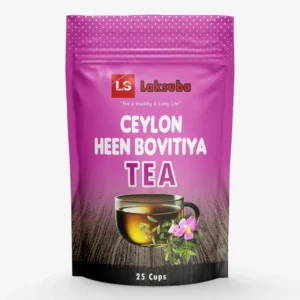
Ready to try Heen Bovitiya the right way? Heen Bovitiya Tea Bags are available in the Laksuba shop, sourced and tested to help you avoid exactly the kind of authenticity concerns this guide describes.