
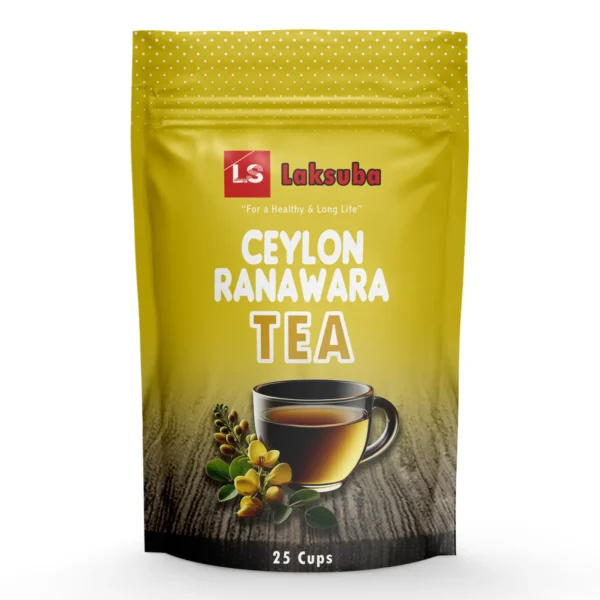
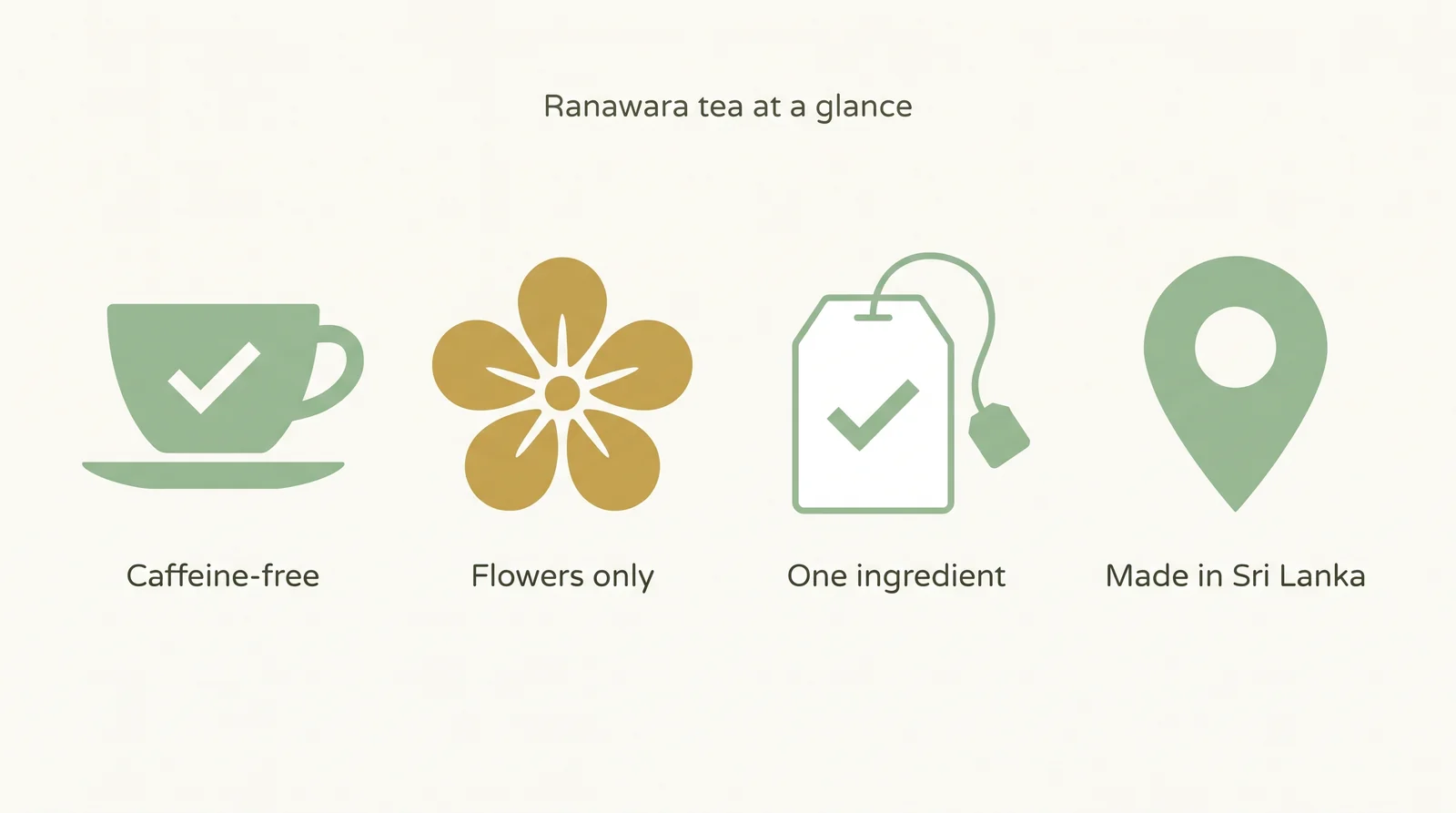
Ranawara tea is a caffeine-free herbal tea made from the flowers of Ranawara (Senna auriculata), also called Avarampoo or Tanner’s cassia. Laksuba’s Ranawara tea is 25 tea bags of finely ground, dried Ranawara flowers from Sri Lanka, with nothing else added. In Sri Lanka it is a traditional herbal drink, sold in shops across the country.
- What Is Ranawara Tea?
- Ranawara vs Laxative Senna
- Ranawara Tea Benefits: Tradition vs Research
- How to Make Ranawara Tea, Hot or Iced
- What’s Inside Every Pouch
- Before You Drink It
- Shipping to the USA, Australia and Worldwide
- You May Also Like
- Storage and Quality
- Frequently Asked Questions
What Is Ranawara Tea?
Ranawara is the Sinhala name for Senna auriculata (formerly Cassia auriculata), a shrub of the legume family (Fabaceae) with bright yellow flowers that grows in the drier regions of India and Sri Lanka. You may also see it sold as Avarampoo (also spelled Avaram poo or Aavaram poo), its Tamil name, or as Tanner’s cassia, Avaram senna or Matara tea. In Ayurveda it is called Avartaki.
Ranawara is a legume, not a relative of the tea plant (Camellia sinensis), so there is no caffeine in the cup. The tea is made from the flowers only, dried and finely ground into tea bags. Nothing else goes into the bag: no flavoring, no sweetener and no additives.
If you grew up with Ranawara in Sri Lanka or Avarampoo in a Tamil home, this is the same plant, now in convenient tea bags.
Ranawara vs Laxative Senna: Not the Same Plant
The senna used in laxative products is a different species, Senna alexandrina (also sold as Indian senna), grown for its leaves and pods. Ranawara shares only the genus name.
That said, we do not promise that Ranawara tea has no effect on the bowel. A 2021 review of the plant lists anthraquinone compounds among its constituents, the family of compounds behind laxative senna’s action. We sell it as a herbal drink, not as a laxative. If you notice loose stools or cramps, drink less or stop.
Ranawara Tea Benefits: Tradition vs Research
Traditional use in Sri Lanka
In Sri Lanka, Ranawara tea is made by boiling the dried flowers, and the Sri Lanka Export Development Board notes that it is sold in shops across the country. Like many Sri Lankan herbal teas, it is often taken with a little jaggery. Traditional descriptions call it a cooling drink, and in Ayurveda and Siddha medicine different parts of the plant, not only the flower, appear in many traditional preparations.
That is tradition, not scientific proof. We have not found a well-controlled study in people showing that the tea cools the body or has any other health effect.
What the research says
Most published research on Ranawara (Senna auriculata) is laboratory and animal work, mainly in rats, using concentrated extracts of the flower, leaf or other parts. It has looked at antioxidant activity and at blood sugar, among other things. Those studies cannot tell us what a cup of tea does in people. The 2021 review says preclinical safety results exist but that comprehensive human studies are still needed, and the small human studies we found were pilot studies, not well-controlled trials.
What we claim, and what we don’t
We sell it as a herbal drink, not as a treatment. We make no claim that it treats, prevents or cures any condition. Research on concentrated extracts says little about a cup of tea, and traditional use is not proof. Please do not use it in place of medicine or medical advice.
How to Make Ranawara Tea, Hot or Iced
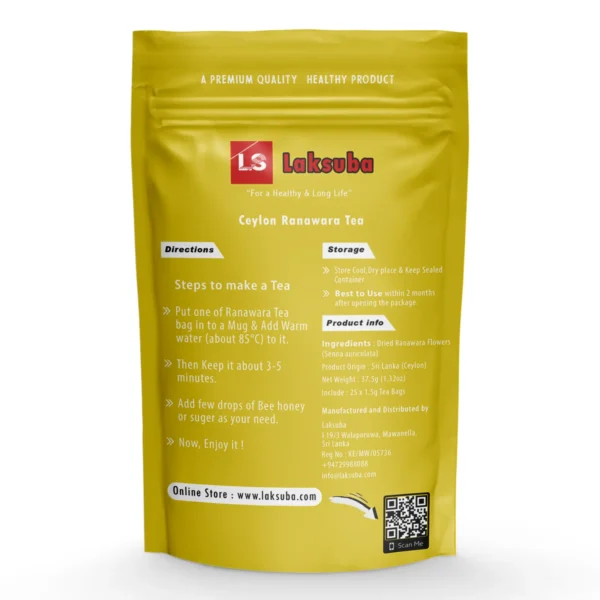
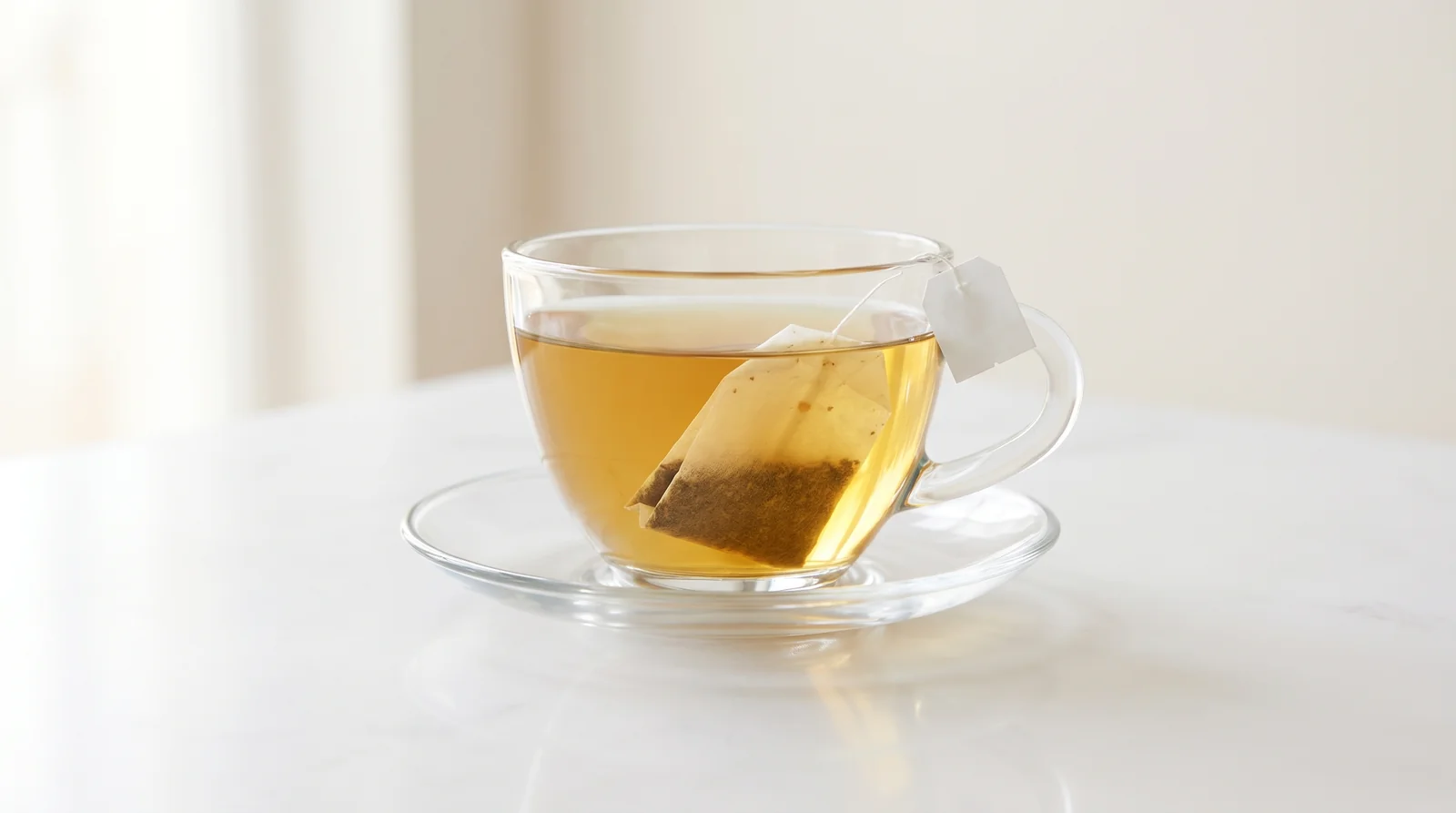
Here is how to make Ranawara tea at home. The hot method follows the directions printed on the pack.
Hot method
- Put 1 tea bag in a mug or cup
- Pour over warm water at about 85°C (185°F)
- Let it steep for 3 to 5 minutes, then take the bag out
- Stir in a little honey, jaggery or sugar if you like, or enjoy it plain
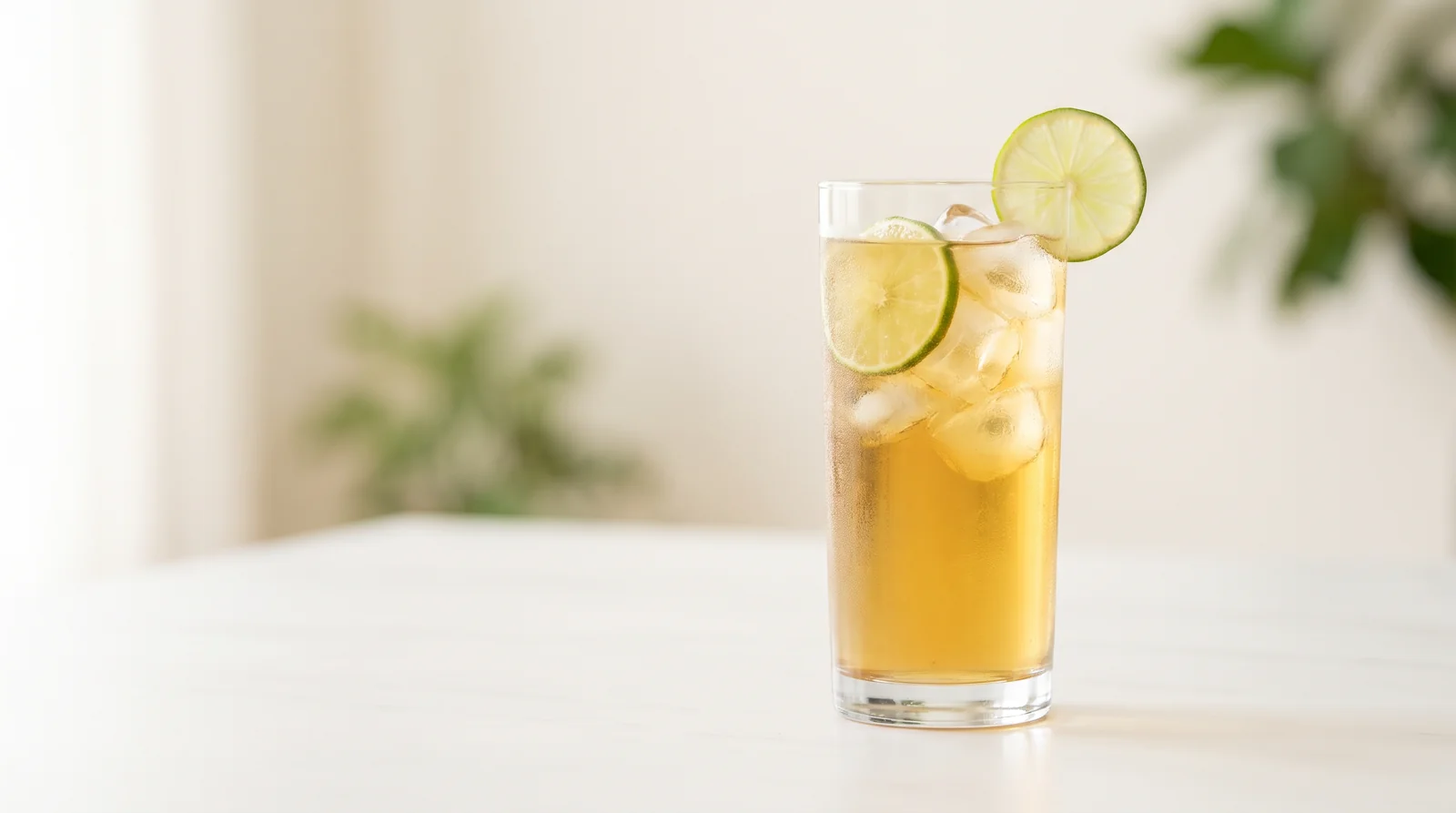
Iced method
- Make a strong cup first: 1 tea bag in hot water for 5 minutes, then let it cool to room temperature
- Fill a tall glass with ice, pour the cooled tea over it and add a slice of lime if you like
- For a cold brew, put 1 tea bag in a glass of cool water, cover it and refrigerate for several hours (6 to 8 is a good starting point)
- Taste and adjust the strength to suit you
What’s Inside Every Pouch
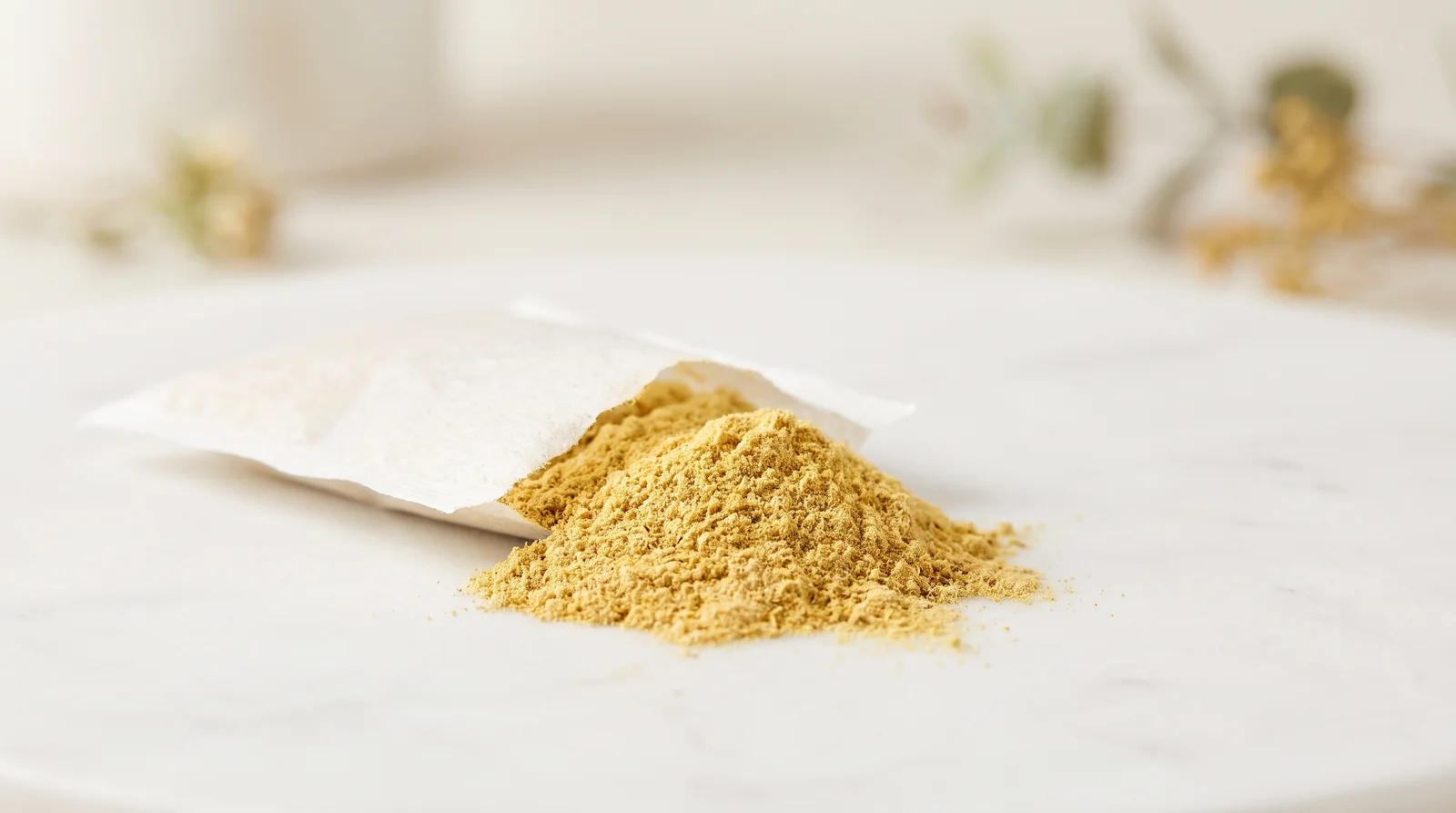
- 25 tea bags of finely ground, dried Ranawara (Senna auriculata) flowers, about 1.5 g each
- Net weight per pouch: 37.5 g (1.32 oz)
- Ingredient list: Ranawara flowers (100%), dried and finely ground. No other ingredients.
- Plant part: flowers only
- Caffeine: none
- Origin: Sri Lanka
- Packaging: resealable zip pouch; the tea bags and the pouch use eco-friendly materials.
Before You Drink It
Ranawara is a traditional plant, and human safety research on it is limited, so please keep these points in mind:
- Pregnancy and breastfeeding: we do not have enough human safety information, so please avoid it unless your healthcare provider says it is fine.
- Diabetes medication: research on Ranawara (Cassia auriculata) has looked at blood sugar, and a rat study found that a concentrated extract reduced absorption of the diabetes drug metformin, although a traditional extract in the same study did not. That was an extract, not tea, but if you take diabetes medication, ask your doctor or pharmacist before you drink Ranawara tea regularly.
- Carbamazepine: a rat study of Cassia auriculata herbal tea and a drug-interaction reference both flag a possible interaction with carbamazepine, a medicine used for epilepsy and nerve pain. If you take it, ask your doctor first.
- Other medication and health conditions: if you take any other prescription, or have a kidney, liver or other ongoing medical condition, check with your healthcare provider first.
- Surgery: if you have an operation planned, tell your doctor that you drink herbal teas. The same drug-interaction reference advises stopping Cassia auriculata at least two weeks before planned surgery.
- Digestion and reactions: if you notice loose stools, cramps or any unusual reaction, stop drinking it. The plant is in the legume family, so check with your healthcare provider first if you have a known legume allergy.
This section is general information and does not replace advice from your own doctor or pharmacist.
Shipping to the USA, Australia and Worldwide
Laksuba ships Ranawara tea from Sri Lanka to the USA, Australia and countries worldwide. Your delivery estimate appears at checkout.
For orders to the USA, import duties are collected at checkout, even for a single pouch. For other countries, an order of one to three pouches usually arrives without import duties, but rules differ by country and larger orders are more likely to be charged, so we cannot promise that no duties or taxes will apply.
Australia sets biosecurity import conditions for herbal teas. The Department of Agriculture says these conditions vary with the ingredients and how the tea is prepared, including whether it is in tea bags, and that some herbal teas need an import permit. This tea has a single ingredient, dried and finely ground flowers, sealed in tea bags inside a small 37.5 g pouch. If you are ordering from Australia, check the Department’s BICON system (search “tea for human consumption”) before you buy.
You May Also Like
If you enjoy flower teas, Bael Tea (Belimal) is another Sri Lankan flower tea, made from the blossoms of the bael tree. For a leaf and stem tea, try Iramusu Tea. To see how research on another Sri Lankan herb is explained, read our Heen Bovitiya guide, or browse the full Ceylon herbal tea collection.
Storage and Quality
- Reseal the zip after you take out a tea bag
- Store it in a cool, dry cupboard, away from sunlight, heat and moisture
- Your order is covered by our 30-day satisfaction guarantee
Frequently Asked Questions
Is Ranawara the same as Avarampoo, Tanner’s cassia or Matara tea?
Yes. Ranawara, Avarampoo (Avaram poo), Tanner’s cassia, Avaram senna and Matara tea are all names for the same plant, Senna auriculata, formerly called Cassia auriculata. Ranawara is the Sinhala name and Avarampoo is the Tamil name.
Is Ranawara tea the same as senna laxative tea?
No. Laxative senna products use a different species, Senna alexandrina. Ranawara is Senna auriculata, and we sell it as a herbal drink, not a laxative. Reviews of the plant list anthraquinone compounds among its constituents, so we do not claim it has no effect on the bowel. If you notice loose stools or cramps, drink less or stop.
Is this tea made from the flowers only?
Yes. The only ingredient is dried Ranawara flowers, finely ground, and nothing else is added. Other parts of the plant, such as the leaves and bark, are used in some traditional preparations, but this tea is made from the flowers.
What does Ranawara tea taste like?
Taste is personal, so descriptions vary. It is usually described as mild, with a slightly bitter finish, and it brews to a golden-amber color. A little honey, jaggery or a slice of lime can soften the finish if you prefer.
Does Ranawara tea have caffeine?
No. It is made from a legume shrub, not from the tea plant (Camellia sinensis), so it is naturally free of caffeine.
How do I make Ranawara tea?
Put one tea bag in a mug, add warm water at about 85°C (185°F) and steep for 3 to 5 minutes before taking the bag out. Sweeten with honey, jaggery or sugar if you like. For iced tea, let the brewed cup cool and pour it over ice.
Can I drink Ranawara tea every day?
No daily amount has been established, because the tea has not been tested in well-controlled studies in people. If you are new to it, you could start with one cup a day and see how you feel. If you take medication or have a medical condition, ask your healthcare provider first.
Is Ranawara tea safe during pregnancy or breastfeeding?
We do not have enough human safety information to recommend it during pregnancy or breastfeeding. Please avoid it unless your healthcare provider says it is fine.
Does Ranawara tea lower blood sugar?
We do not claim that it does. Research on Ranawara has looked at blood sugar, mainly in rats using concentrated extracts, and the small human studies we found were pilot studies, not well-controlled trials. The tea is not a treatment for diabetes or any other condition, and it should never replace prescribed medicine.
Can I drink Ranawara tea if I take medication?
Ask your doctor or pharmacist first. Rat studies of Cassia auriculata extracts have reported interactions with the diabetes drug metformin, and a rat study and a drug-interaction reference flag a possible interaction with carbamazepine, a medicine for epilepsy and nerve pain. The tea is not a substitute for any prescribed medicine.
Statements on this page about traditional use and published laboratory research have not been evaluated by the Food and Drug Administration. This tea is not intended to diagnose, treat, cure or prevent any disease, and it is not a substitute for medicine or medical advice. Individual experiences vary. If you are pregnant, breastfeeding, taking medication or managing a medical condition, please check with your healthcare provider before use.


Carter –
Lasantha Perera –
Maya –
Lalitha Herath –
Jayden –